
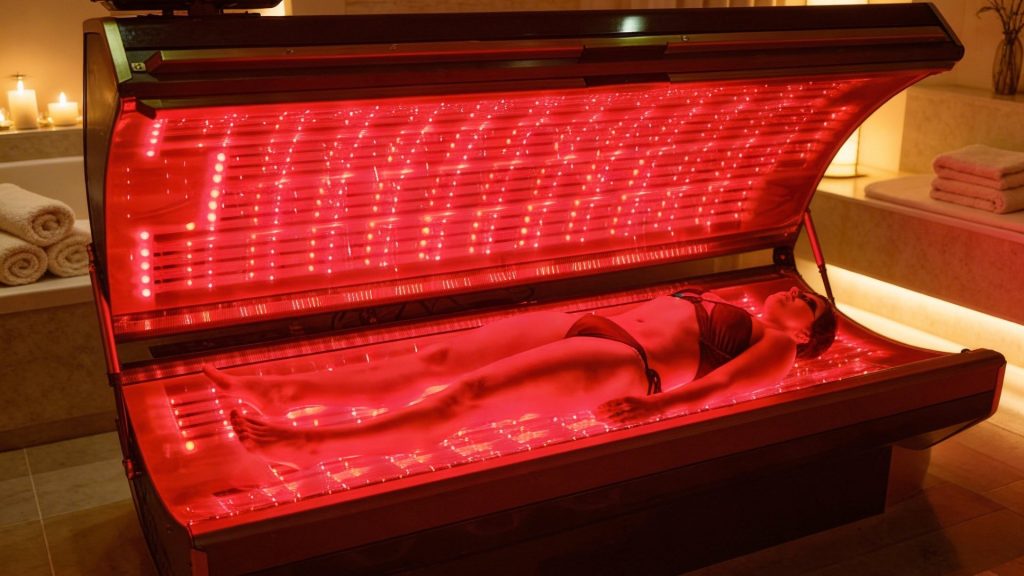
Red light therapy beds are becoming increasingly popular among spa-goers, prized for their ability to promote healthier skin and speed up recovery. For spa owners, the real task is setting a price point that captures this growing demand while still delivering solid profits.
In this article, we break down costs, market benchmarks, and smart strategies to find your ideal rate per session.
Understanding Red Light Bed Therapy Basics
Red light bed treatments use full-body beds that bathe you in wavelengths from 630 to 850 nanometers, penetrating deep to boost collagen, ease inflammation, and speed muscle recovery. Unlike handheld panels or masks, these beds cover your entire body in one go, delivering higher power for noticeable results in just 10 to 20 minutes.
Most people use red light beds for a mix of skin goals (tone, texture, fine lines) and performance/recovery (post-exercise soreness, stiffness). Results tend to be gradual, with best outcomes linked to consistent sessions (often a few times per week for several weeks), plus basics like hydration, sleep, and sensible training.
Clients often return for the convenience and proven benefits. Studies highlight how red light therapy increases skin elasticity by up to 30% after consistent use.
Key Factors Influencing Pricing
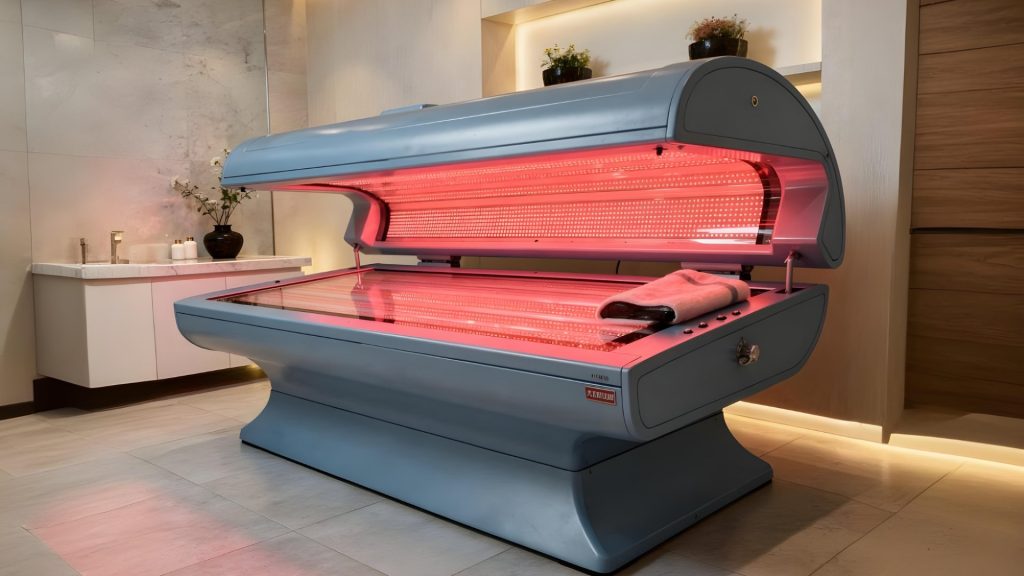
Your equipment stands out as the highest upfront cost. Premium full‑body red light therapy beds use medical‑grade red and near‑infrared LEDs for full‑body coverage, allowing clinics and spas to charge premium session rates while supporting reliable, repeatable results. The INNER Light LED Bed, which we produce at INNERGY Dev, typically requires a significant investment but offers strong revenue potential for your center.
When planning your pricing, account for ongoing costs as well. Variable expenses such as electricity (which may add roughly $5 per session for high‑wattage beds) and maintenance to keep irradiance levels optimal should be built into your per‑session calculation. Location matters, too. Urban wellness centers often command higher rates due to greater demand and overhead.
Market Research: Real-World Pricing Benchmarks
The global market for this therapy is projected to reach $1.44 billion by 2030, according to Grand View Research, driven by demand in spas, gyms, and home studios. This growth signals strong potential for providers who understand the basics.
Across the U.S., most providers charge $40 to $80 for a standard 20-minute session, pulled from directories like SpaFinder and wellness apps. Gyms and fitness studios lean toward the lower end at $25 to $80, often bundling with memberships to fill slots quickly. Med spas push higher, from $50 to $150, by pairing treatments with facials or consultations.
Adjust for your area’s cost of living. Add 30% or more in places like California or New York compared to the Midwest. Check local competitors on Google or Yelp to spot gaps, such as underserved premium options.
Use this simple five-step checklist:
- Write down five nearby businesses that offer similar services
- Record their prices and package deals
- Compare how long each session lasts
- Decide what makes your service better or different
- Try one small price change and see how customers respond
Calculating Your Break-Even and Profit Pricing
Start by listing your fixed monthly costs, such as $2,000 in rent and $500 in equipment loans, for a total of $2,500. Then account for variable costs per session, like $5 for electricity and $3 for clean linens, or $8 per session.
To find your break-even price, divide total fixed costs by your expected monthly sessions and add the per-session variable cost, using the formula ($2,500 ÷ 100) + $8 = $33 per session. From there, apply a 50% to 100% markup to support profit, resulting in a final price range of $50 to $65, depending on your business goals.
Free tools from QuickBooks or red light suppliers can simplify the math with plug-and-play calculators. Track actuals monthly to refine and ensure every session contributes to growth.
Pricing Strategies to Maximize Revenue
Always remember that client type shapes your pricing power. High‑end med spa visitors frequently expect luxury and are willing to pay more for expertise and premium technology like the INNER Light LED Bed. In contrast, gym visitors tend to seek more affordable options.
Certifications from reputable groups such as the International Center for Red Light Therapy can also boost credibility and allow you to charge 20% to 50% above basic rates. Calculate your true costs first to avoid leaving money on the table.
Offer tiers to match client needs: a basic $45 session for quick exposure, a $65 premium session with hydrating serums, and $85 VIP packages that include everything in the lower tiers, plus recovery coaching for higher-value clients. Packages are more advantageous for your establishment: offer 10-packs at 20% off, or sell monthly unlimited access for $200 to lock in repeat business. These keep beds busy and revenue steady.
Test introductory rates like $30 for first-timers to build buzz, then apply peak-hour boosts for evenings. Upsell products such as post-treatment creams that extend benefits at home. Integrate with booking software like Mindbody to automate dynamic pricing based on demand.
Legal and Best Practices Considerations
- Secure liability waivers for every client and carry at least $1 million in insurance, costing about $500 per year to cover rare issues like skin reactions.
- Stick to FDA-cleared beds and screen for contraindications such as epilepsy or pregnancy to avoid claims. State rules vary. California, for example, requires detailed client consents, while Texas focuses on device registration.
- Market effectively with real before-and-after photos and testimonials on your site.
- Aim for 60% bed utilization and 70% client retention by tracking bookings.
- Noncompliance with spa or wellness center guidelines risks fines up to $10,000 per violation in regulated states, so consult a local attorney early.
Common Pitfalls and How to Avoid Them
New providers often undervalue their beds by matching low panel prices, missing the full-body premium that justifies a double rate. Overpricing without testing leads to empty slots. Start by surveying 20 potential clients to gauge their willingness to pay. Multi-bed setups tempt overexpansion, so scale only after hitting 70% occupancy on the first.
Avoid generic marketing by highlighting unique results like “faster post-workout recovery.” Test one change at a time, such as a $5 price hike, and measure bookings for two weeks. This methodical approach prevents costly missteps.
Final Thoughts from INNERGY Dev
Pricing red light bed sessions from $50 to $100 balances costs, market rates, and client value for most setups. Run your numbers with the break-even formula, scout local competitors, and launch tiered packages with introductory offers. Review metrics quarterly to adjust, ensuring steady profits as your business grows.
At INNERGY Dev, we produce the INNER Light LED Bed, a full-body red light therapy system featuring medical-grade red and near-infrared LEDs for deep tissue penetration and cellular regeneration. This plug-and-play bed supports professional wellness centers with easy integration, generating $40 to $120 per session through high-demand services like inflammation reduction and skin health. If you pair our devices, backed by our onboarding support and over 30 years of expertise, with the presented strategies, you’ll not only encourage clients to come back for repeat sessions, you’ll also turn first-timers into loyal, returning customers.