
Transcranial Magnetic Stimulation (TMS) therapy continues to gain attention across clinical and wellness settings. For medical spa owners and wellness providers, understanding who is legally and professionally permitted to deliver the therapy matters before adding it to any service menu.
This article explains the qualifications, oversight requirements, and practical considerations tied to performing TMS, with a clear focus on regulatory expectations and responsible implementation.
Understanding What Transcranial Magnetic Stimulation Involves
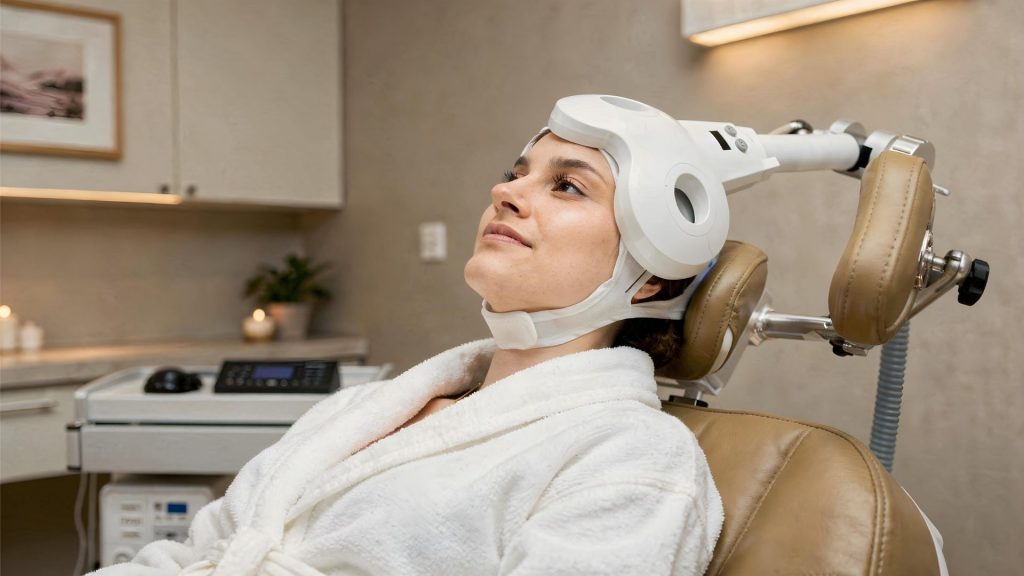
Transcranial Magnetic Stimulation is a non-invasive neuromodulation technique that uses magnetic fields to stimulate specific areas of the brain. The procedure involves placing a magnetic coil against the scalp, delivering targeted pulses that influence neural activity. It differs from massage-based or aesthetic technologies because it interacts directly with brain function rather than surface tissue.
This distinction places TMS within a category that regulators view as higher risk than general wellness modalities. Although the procedure does not involve surgery, anesthesia, or medication, it still requires clinical judgment, patient screening, and adherence to safety protocols. These factors shape who may perform this therapy and under what conditions.
Medical Oversight Requirements for TMS
In most jurisdictions, Transcranial Magnetic Stimulation falls under medical treatment rather than general wellness care. As a result, a licensed physician typically must oversee the service. This physician’s role includes evaluating patient eligibility, establishing treatment parameters, monitoring outcomes, and addressing adverse responses.
Direct physician presence during every session is not always required, yet physician involvement remains central. Medical boards expect a formal relationship that defines who is responsible for clinical decisions. Med spa business owners exploring TMS must plan for this oversight arrangement early, since operating without proper medical direction can trigger compliance risks.
Licensed Professionals Commonly Permitted to Perform TMS
Day-to-day operation of Transcranial Magnetic Stimulation equipment often falls to licensed healthcare professionals working under physician supervision. Common examples include psychiatrists, neurologists, nurse practitioners, physician assistants, and registered nurses. In some regions, psychologists with specialized training also participate in TMS delivery within defined limits set by their licensing authority, training credentials, and physician-directed treatment protocols.
The scope of practice laws determines which roles qualify. These laws vary across states and countries, making local legal review essential. Training remains a requirement regardless of license type. Certification programs focus on coil placement, dosing protocols, patient safety, and device operation. Without this education, licensure alone does not satisfy regulatory expectations.
TMS and Non-Medical Wellness Settings
Interest in TMS has expanded into wellness clinics, biohacking studios, and medical spas. This expansion often creates confusion around whether non-medical staff may perform sessions. In most regions, unlicensed personnel cannot independently administer TMS, even within a wellness-focused environment.
Some technologies use magnetic stimulation for muscle or peripheral nerve activation rather than brain modulation. These devices fall under different classifications and follow separate rules. Confusion can arise when marketing language overlaps. True Transcranial Magnetic Stimulation targets the brain and remains subject to medical oversight. Wellness providers must confirm whether a device qualifies as medical TMS or another form of magnetic therapy with a different regulatory status.

Training, Credentialing, and Operational Readiness
Training remains a core requirement for anyone involved in TMS delivery or any other advanced therapy. Education covers patient screening, contraindications, seizure risk awareness, equipment calibration, and emergency response. Documentation of training protects both providers and patients while satisfying compliance audits.
Operational readiness extends beyond staff credentials. Clinics must maintain treatment protocols, informed consent procedures, and follow-up processes. Equipment maintenance and session documentation also play a role. These expectations align TMS more closely with clinical services rather than aesthetic or relaxation-based offerings.
Legal and Ethical Considerations for Wellness Business Owners
Offering TMS without proper authorization exposes business owners to legal penalties and reputational damage. Regulatory agencies evaluate claims, patient safety practices, and professional boundaries. Ethical concerns arise when clients receive brain-directed treatments without clear medical oversight or transparent communication.
Business owners planning to open a med spa and integrate TMS or any advanced wellness devices should consult healthcare attorneys or regulatory advisors familiar with state medical board standards. This step helps clarify supervision models, staffing requirements, and acceptable marketing language. Responsible planning protects clients while allowing innovation within legal limits.
Final Thoughts from Innergy Dev
Transcranial Magnetic Stimulation sits at the intersection of neuroscience and clinical care. Delivery requires licensed professionals, formal medical oversight, and specialized training. Wellness providers considering TMS must recognize its medical classification and prepare for the regulatory responsibilities that accompany it.
At Innergy Dev, we design and manufacture professional wellness devices for clinical and wellness environments. We work closely with medical spas and healthcare professionals who operate within defined professional boundaries. Through education, device expertise, and operational guidance, we help providers assess whether new technologies align with their practice goals and regulatory environment, ensuring informed decisions grounded in clinical responsibility.